What Is Frontend and Backend?
If you’re new to web development, you’ve probably heard the terms frontend and backend thrown around a lot. They sound intimidating at first, but the concept is actually straightforward once you break it down.
Understanding frontend vs backend is essential if you want to build websites, work with developers, or decide which technical path to pursue. This article explains the difference between frontend and backend in simple terms, with practical examples and real-world insights from hands-on experience.
By the end, you’ll know what each side does, how they interact, and where beginners usually start.
What I Need To Know?
There are no strict technical prerequisites to understand this topic. However, it helps if you have:
- Basic knowledge of how websites work
- Familiarity with using a browser (Chrome, Firefox, etc.)
- Curiosity about how web applications are built
No programming experience is required.
What Is Frontend Development?
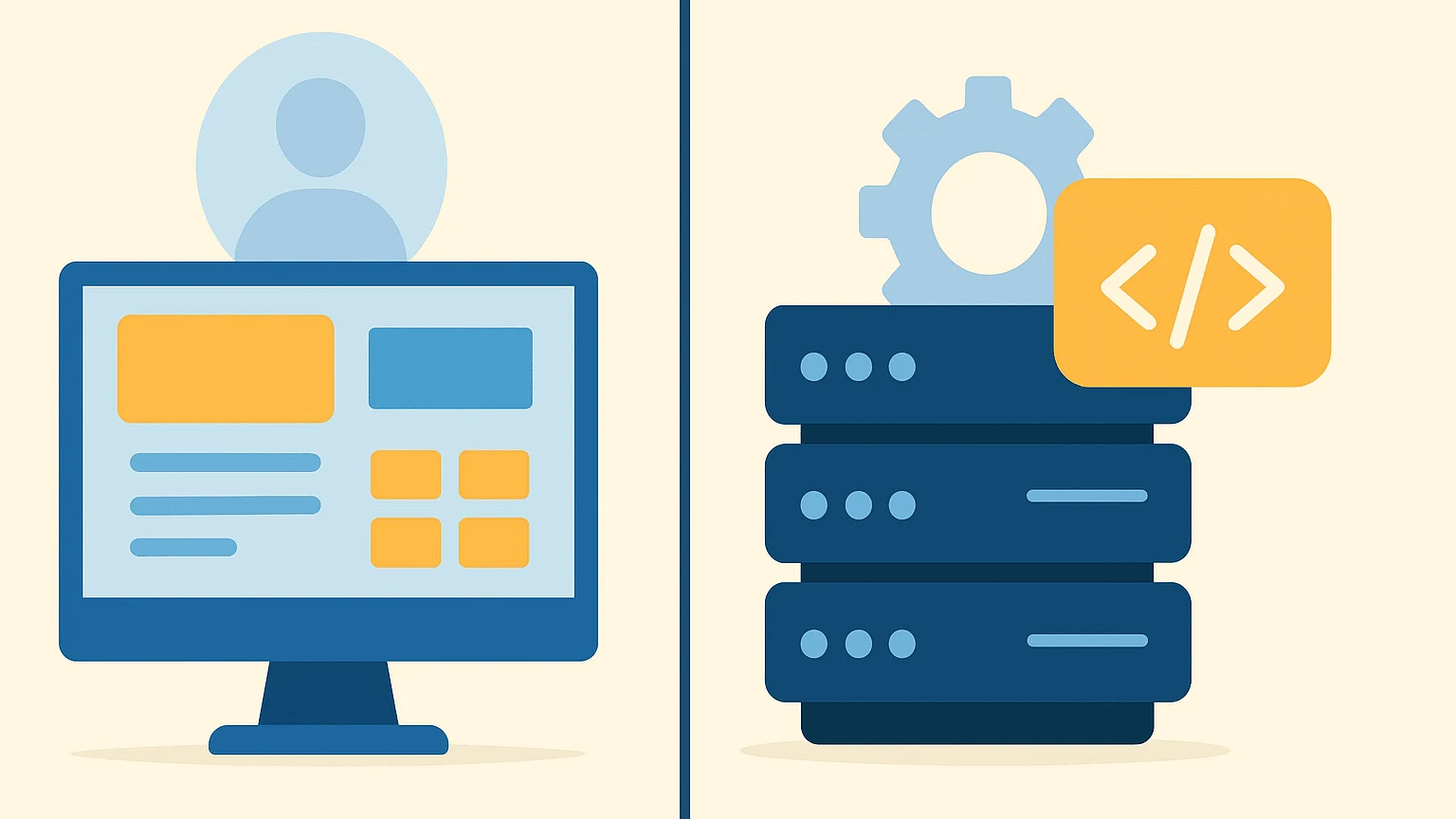
Frontend refers to everything users see and interact with directly in their browser.
This includes:
- Layout and structure
- Colors, fonts, and animations
- Buttons, forms, and navigation menus
In simple terms, the frontend is the face of a website.
Common Frontend Technologies
- HTML - structure of the page
- CSS - styling and layout
- JavaScript - interactivity and dynamic behavior
Popular frontend frameworks and libraries include:
- React
- Vue.js
- Angular
Frontend Responsibilities (Quick List)
- Make the website visually appealing
- Ensure responsiveness on mobile and desktop
- Improve user experience (UX)
- Communicate with backend APIs
What Is Backend Development?
Backend is everything that happens behind the scenes.
Users don’t see it directly, but it powers the website’s logic and data handling.
Backend typically manages:
- Databases
- Authentication and authorization
- Business logic
- Server-side processing
If frontend is the storefront, backend is the warehouse and accounting system.
Common Backend Technologies
- Languages: PHP, Python, Java, Go, Node.js
- Databases: MySQL, PostgreSQL, MongoDB
- Servers: Nginx, Apache
- APIs: REST, GraphQL
Backend Responsibilities (Quick List)
- Process user requests
- Store and retrieve data
- Enforce security rules
- Communicate with frontend via APIs
Frontend vs Backend: Key Differences at a Glance
| Aspect | Frontend | Backend |
|---|---|---|
| Runs on | User’s browser | Server |
| Focus | UI & UX | Logic & data |
| Visibility | Visible to users | Hidden from users |
| Main skills | HTML, CSS, JS | Programming, databases |
| Performance impact | Load speed, usability | Stability, scalability |
This table is often featured in search results because it clearly highlights the difference between frontend and backend.
How Frontend and Backend Work Together (Step-by-Step)
- A user opens a website in their browser.
- The frontend loads HTML, CSS, and JavaScript.
- The user clicks a button or submits a form.
- The frontend sends a request to the backend API.
- The backend processes the request and accesses the database.
- The backend sends data back to the frontend.
- The frontend updates the UI based on the response.
This interaction happens constantly, often in milliseconds.
Best Practices and Common Beginner Mistakes
Best Practices
- Clearly separate frontend and backend responsibilities
- Use APIs instead of tightly coupled logic
- Validate data on both frontend and backend
- Keep security logic on the backend
Common Mistakes
- Putting sensitive logic in frontend JavaScript
- Assuming frontend validation is enough
- Ignoring error handling between frontend and backend
- Overcomplicating the stack too early
FAQ: Frontend vs Backend
What is the main difference between frontend and backend?
Frontend handles what users see and interact with, while backend handles logic, data, and server-side processing.
Can one person do both frontend and backend?
Yes. Developers who handle both are called full-stack developers.
Which is easier for beginners, frontend or backend?
Frontend is often easier to start with because you can immediately see visual results.
Do frontend developers need backend knowledge?
Basic backend understanding is highly recommended, especially when working with APIs.
Is backend more important than frontend?
Neither is more important. A good website needs both to work together properly.
Wrapping Up
Understanding frontend vs backend is a foundational step in learning web development. Frontend focuses on user experience and presentation, while backend ensures everything works reliably behind the scenes.
For beginners, frontend is usually the easiest entry point, but long-term growth often comes from understanding both sides. No matter which path you choose, knowing the difference between frontend and backend will make you a better developer and a more effective collaborator.
If you’re just starting out, pick one side, learn it well, and gradually explore the other. That’s how most professionals do it.